
Frequently Asked Questions
Have questions about acupuncture or what to expect at your first visit? You’ll find answers to some of the most common questions below.
If you’re not sure whether acupuncture is a good fit for you, send a message through the Contact page or schedule a complimentary 15-minute phone consultation.
-
Your first visit begins with a comprehensive consultation. We’ll discuss your health history, current concerns, and treatment goals, along with other aspects of your health that may help me understand the broader picture.
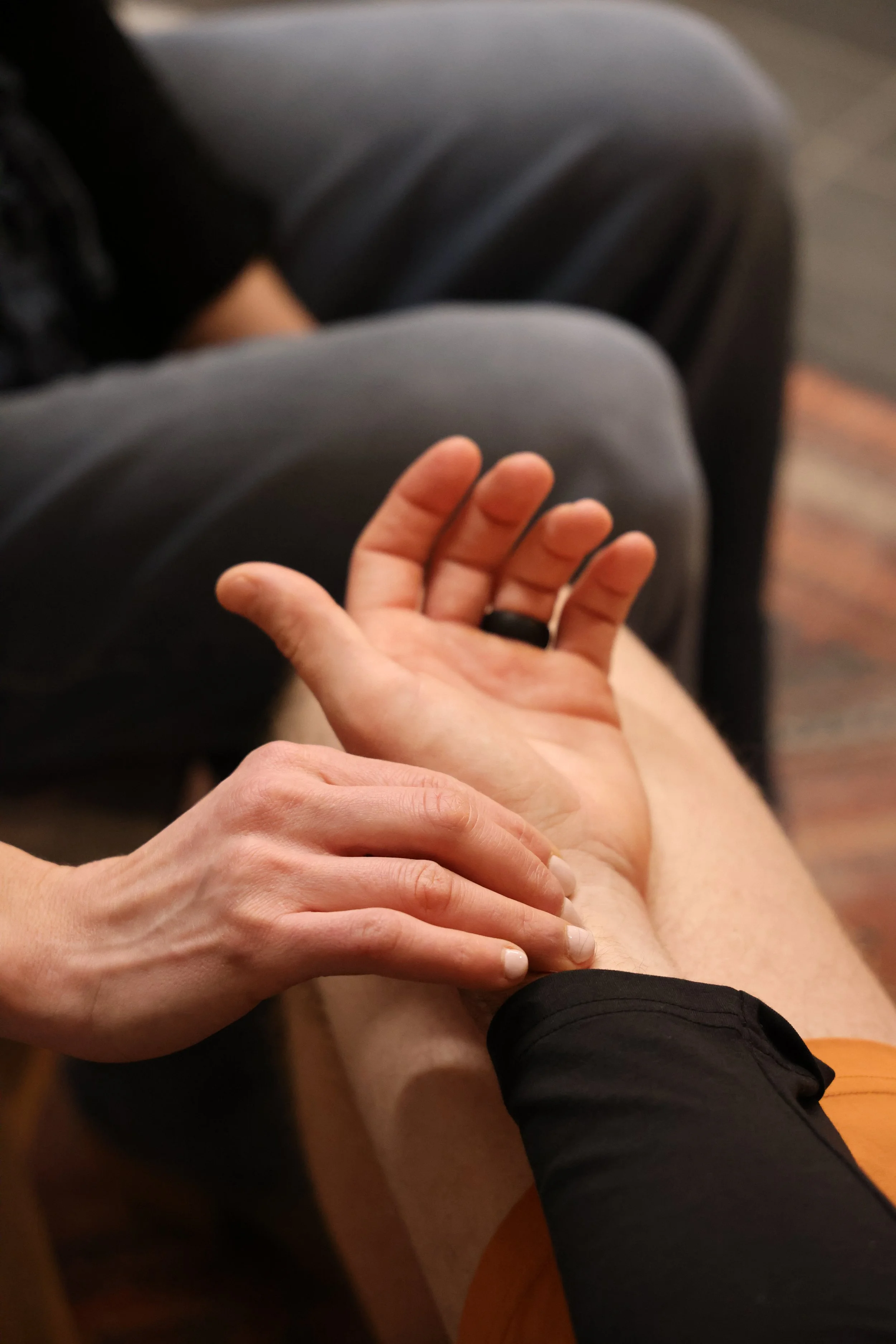
I’ll also use Chinese medicine diagnostic methods, including pulse diagnosis and physical assessment when appropriate, to help guide your treatment. Your first visit includes an individualized acupuncture treatment using thin, sterile, single-use needles.
Before we begin, I’ll explain the treatment and answer any questions so you know what to expect.
-
Acupuncture is rooted in the principles of Classical Chinese Medicine, which views the body as an interconnected whole. Qi, blood, and body fluids move through a network of channels, and symptoms may arise when that movement becomes disrupted or when the body is no longer adapting well to internal or external stressors.
By stimulating carefully selected acupuncture points, treatment is intended to influence these channel relationships, encourage the movement of Qi and blood, and support a more balanced pattern of function. Rather than treating a symptom in isolation, Chinese medicine looks at how different signs and symptoms relate to one another and uses that larger pattern to guide treatment.
From a biomedical perspective, research suggests that acupuncture may influence several physiological processes involved in pain, stress, and regulation. Studies have explored its effects on the nervous system, including the release of endorphins and other neurochemicals involved in pain perception, as well as possible effects on circulation and the body's response to stress.
These two perspectives use different language, but both recognize that acupuncture can have effects beyond the exact location where a needle is placed. Treatment is individualized according to your symptoms, health history, and the patterns identified during your visit, with the goal of supporting more comfortable and coordinated function over time.
-
Acupuncture needles are very thin — much thinner than needles used for injections or blood draws — so most patients feel little to no discomfort. You may experience a mild tingling, warmth, or heaviness at the needle site, which signals that your body is responding to the treatment. It is typically a very subtle and relaxing sensation.
-
Treatment frequency depends on your condition, how long you’ve had it, and how you respond to acupuncture. For many concerns, a course of 6–10 weekly treatments is a reasonable starting point. We’ll assess your progress along the way and adjust the frequency of treatment as needed.
-
To get the most out of your acupuncture session, it’s helpful to:
Avoid heavy meals right before your treatment and arrive well-hydrated.
Wear loose-fitting, comfortable clothing.
After your session, rest as much as you can for the first few hours, and drink plenty of water to support your body’s healing process.
Many patients feel a sense of relaxation after treatment, though some may feel energized.
-
Yes. In Chinese Medicine, emotional and physical health are not treated as separate systems. Stress, anxiety, low mood, difficulty sleeping, and periods of emotional overwhelm can all be understood as part of a larger pattern affecting the way Qi and blood move through the body.
Acupuncture treatment is individualized according to what is happening for you physically and emotionally, as well as what is found through pulse diagnosis and the channels. The goal is not simply to suppress a symptom, but to help restore more ease and movement where the system has become strained, stuck, or depleted.
Many patients find acupuncture to be a supportive complement to psychotherapy and other forms of mental health care. It is not a replacement for appropriate mental health treatment, but it can be one part of a broader approach to emotional wellbeing.
-
Yes. Pediatric treatments are gentle and adapted to each child’s age and comfort level. Depending on the child, treatment may include acupuncture or non-needle techniques such as acupressure and gentle massage. Pediatric appointments are typically 30–45 minutes.
-
Some insurance plans include acupuncture—check with your provider to see what’s covered for you. I accept FSA and HSA cards and can provide a superbill (an itemized invoice including insurance coding), so you can submit it to your insurance directly for reimbursement.
-
Appointments can be scheduled online through the booking page. New patients may book an initial acupuncture visit directly or schedule a complimentary 15-minute phone consultation if they’d like to speak with me before getting started.
If you have questions or need help scheduling, you’re also welcome to contact me directly.
-
I require 24 hours’ notice for any appointment cancellation. Cancellations made with less than 24 hours’ notice or no-shows will incur a $50 cancellation fee.
If you are running late for your appointment, please notify me by email or text as soon as possible. If you arrive within 15 minutes of your scheduled appointment, I will do my best to accommodate you. Arrivals later than 15 minutes after your appointment time may require rescheduling.
-
My office is located at 16 Quaker Avenue in Cornwall, NY 12518. Visit the Contact page for additional location details and current office hours.

Ready to Get Started?
Schedule your initial acupuncture visit.